Friday, March 2, 2012

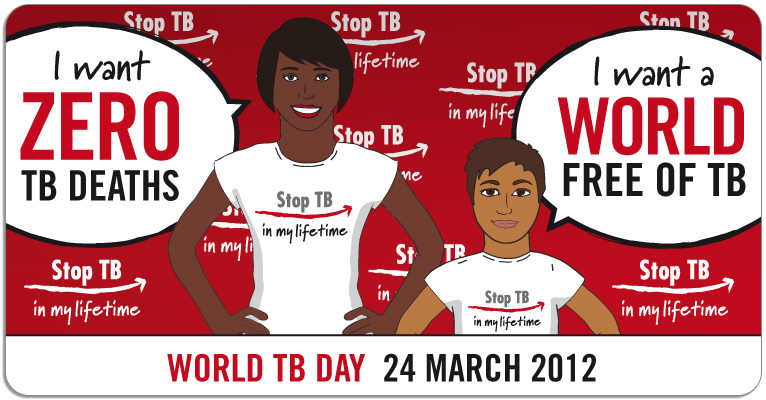
Are we ready for ZERO TB?


Are we ready for ZERO TB? 
A reality check in India


Tuberculosis (TB), one-third of the world's population has fallen victim to this communicable disease. Numerous organizations across the world have been working hard to control it since many years. Recently, all have come together, and a collaborative environment has built up. Now the target is to achieve ZERO TB death by 2050. A dream which when becomes reality will save millions of humans on this planet, and may further lead to complete TB eradication.

The condition of India is very disappointing, it’s number one on Tb deaths and no matter how bigger is the approach to fight for it the success rate is very low in contrast to what is claimed by many Tb control programs. To check how is the TB control program and treatment, as well as the awareness amongst the people; I recently visited few places in the state of Maharashtra (India).

  My visit to a village (Umroli) in Palghar said a very different story. Palghar has been on the radar TB for high incidence of the disease and of MDR TB which led me to investigate more on why is this so. I interacted with few affected ones and some who are under treatment. Mostly people are not aware of what the disease is.  The economical conditions of the families are very poor.

 A family head says that “if I go to take DOTS every alternate day at the health center, who will earn bread and butter, so I took the treatment for few days regularly, and now I very rarely go there”. One of the key problem lies here is that the health center is very far from the home, which discourages the people from visiting it regularly. If an area is having such a high prevalence of Tuberculosis it’s the responsibility of the health center and the government to find a convenient way to help the affected ones and to educate the villagers on tuberculosis.


Later, I visited Pune city and its adjoining areas (Khadki, Pimpri, Chinchwad, kasarwadi), and visited few hospitals in this area. The condition of patients in the ward is pathetic; HIV and TB patients are kept together, which is an open invitation for the HIV patients to die early. Patients cough continuously, and the ventilation system isn’t very proper either. Not only the patients in this ward, but also in other wards are more likely to get infected. So what can anyone do if the hospital itself becomes a factory to produce TB patients? Even if the case is of an MDR TB, all the other patients are kept in the same ward. This not only risks the lives of the other patients but also the hospital staff and they are unaware of this risk.

Speaking to some doctors who are specializing in TB, it threw light on more intense problems. And the conclusion I got from this is well enough to understand that why we need a good and different approach if we have to achieve the target of ZERO TB death.


I asked the following Questions and the answers I got from the doctors (they preferred to be kept anonymous).

  1. What is the condition of TB in the city?
A.      On an average, most of the big hospitals in the city register over 50 cases daily.

  1. What are the problems that patients usually face?
A.      The problems are numerous. TB is a poor man’s disease, and most of them lack in literacy. It becomes very challenging task for doctors to make understand a patient on the disease. Since the incidence of TB is very high, the ratio of number of doctors available for tb patients is highly misbalanced, because of which it becomes very difficult for doctors to counsel the patients in detail.


  1. So what may be the possible solution for this?
A.      Government must come up with counseling centers, where we can refer patients. From where they can get information on hygiene, importance of timely medication, and the diet to be followed. They should be encouraged to educate other family members and neighbors’ about it so the spread of the disease can be restricted.

  1. What is your opinion on the DOTS program which is so successful in the country?
  
  A.   The reality is very different from the statistics. The procedure of referring to the DOTS program is very cumbersome; the patient has to go around lots of formal procedures. Since many are not that literate, they generally quit the procedure and the treatment in between. Doctors are not updated properly by the RNTCP. The 6 months DOTS therapy has been kept same for all type of TB. The primary health centers are dispatched with the DOTS package, but there is no way to check if the patient is regularly and timely administered with the medicine.


  1. Zero TB death, it’s a global target now. What’s your opinion on it? How soon we may achieve it?
A.      In India there are much more cases of tuberculosis than estimated. There is no health information system in place to keep a proper track of the existing cases. The diagnosis of disease itself is problematic. We can’t rely on just sputum tests, and the other good methods are costly. Diagnosis is unable to reach at the grass root level; this is where the system fails. No matter how hard we try to control, the disease spreads faster than our imagination and remains undetected because of the above problems. It’s hard to say that I will see this mission become reality till I live, I would be very happy to see the day of ZERO TB death, but we if it has to be real then, then a new and systematic and an effective way has to be designed to overcome tuberculosis completely. Problems which we face here should be studied in detail and then a proper methodology should be put in place buy the organizations and the government. The problem is not just restricted to this city; the condition is same all over the country.


(Thanks to all those who have supported me to prepare this report. Special thanks to my friend
 Dr.Dhiraj Pal for his help and support)

Saturday, November 19, 2011

A gift called Life... !

Life..!


the word itself raises many question in mind, some answered and mostly unanswered ..
Certainly, the quest to find the most accurate definition has been into effort since ages. However, the best answer still comes instantly ie. Lets live it.. who cares!!! .. and probably the best answer we have :)


Living life to its fullest, enjoying each and every moment of it, is what i dream of, and sometimes successful in following it. Daily when i see the sunset at the horizon , walk kilometers of distance on the land which is revolving on its own in some big,dark,lost and totally undefined Space, the greenery and the lively life existing on earth. I feel very fortunate, that i have an existence on planet earth.. Wow..! how else could i have imagined myself to be, if i had not taken birth, probably not be able to even think of it, had it not been.


Ups and downs, rise and fall, all this started since the moment we wanted to stand on our feet as a child, and this is what happens in a true sense in our entire lifetime. Some happier days, some days of sorrow, both exist together at the same time, it depends, form life what we borrow. Life seems to be too much chaotic and too much silent sometimes. Loneliness kills you every second, and sometimes when you are with all your dear ones you simply tend to forget yourself, where you are, what you do.
In between 7 billion of us, when i wake up and i am still breathing, i feel what kind of element am we are made up of to be alive and lively in this bigggg universe... Its truly a miracle to be living each second and to feel and observe the things in motion.. An organized but still a random sequence of events occur daily. This enigmatic and enchanting experience which i feel daily, see daily.. Just one sentence fits into my definition of Life... Life is a Gift!!! and its Beautiful .. :) :) :)


Thanks..!

Monday, October 31, 2011

Drug discovery and Integrated approach for Tuberculosis


The Hindu new year has started and so is the new enthusiasm to work harder for Tuberculosis.
The recent 42nd meet on Tuberculosis at the Union at Lille, France,was a great one, which started with the discussions on the problems faced by the children's, then proceeding ahead with the vaccine, diagnostics, funding, poor countries, and so on.With the Seven Billionth Baby born, and with the recent prediction that the population on earth we will be 9 billion by 2050, our responsibility to protect the coming generations from neglected communicable disease increases.

The thing which really hurts is that Tuberculosis has been a threat to many innocent people, it lays its icy hands on them and people don't come to know about it unless they are in the later stages of the infection. In a country like India the burden is extremely high, so does the responsibility of finding a cure for the disease. (I feel myself proud to be a part of the OSDD community who has been working round the clock for finding a affordable cure.)

After reading so much about tuberculosis, attending conferences, meeting and talking to different people, I have realized is that its very important to look at the disease with a different prospective. Tuberculosis affects all age groups of people, both the sexes, and round the year. However, the effects which are seen differ and shows lots of variation symptomatically. Children's have low immunity power, hence they fall prey to this disease and life expectancy is hardly for few years then if not diagnosed earlier. In adults the power to resist the bacterial infection is more. Genital tb affects the pregnancy in women and causes problems in them to conceive. HIV infection greatly increases the risk of getting a Mycobacterium tuberculosis infection. The statistical figures shows that most of the TB cases are to the one who has been infected with HIV. Thus, the disease can affect a person in numerous ways and so does the symptoms, diagnostics, life expectancy variates accordingly.

Then why shouldn't the drug discovery and development process should be carried keeping in mind the above prospectives? The problem which we are well aware of is that rifampicin/isoniazids is administered for over 40 years now for all the above cases. The toxicity of the drugs is killing many kids around the world, because there is no specific drug guideline for them. Women face lots of hormonal disturbances due to these medicines. The treatment time is undefined for each of the specific types. Hence, there is lot of scope for the researchers to improve the way of the drug research. Using a multi pronged approach may give us a molecule for any of the types, which can be then improved and developed for other types of the disease.

The other things on TB apart from drug discovery, is that, millions of people in India still remain undiagnosed of TB. Over 70% of population lives in over six hundred thousand villages, of which many till today do not have electricity, roads, proper living conditions and shelter, the disease is not possible to get diagnosed. Hence the figures keeps on increasing year by year in the conferences and we are unable to do anything. If a change has to be brought our way of working on TB should change. Awareness on TB is very poor amongst population in many countries, hence, special emphasis should be there to raise awareness between them. Vaccine development is also a brighter side, as we can protect the future generations from TB. Funding is required most urgently now, and the the funds should flow appropriately to all the discussed domains to see a substantial change in the number of TB cases.Overall, an integrated approach is the answer to eradicate tuberculosis from planet Earth :)

Thanks :)

Saturday, September 3, 2011

TB diagnostics in India - Conference Report


Hi Friends!!

I attended the
TB diagnostics in India (From importation and imitation to innovation


In Bangalore last week (25th-26th August), representing OSDD at the conference.
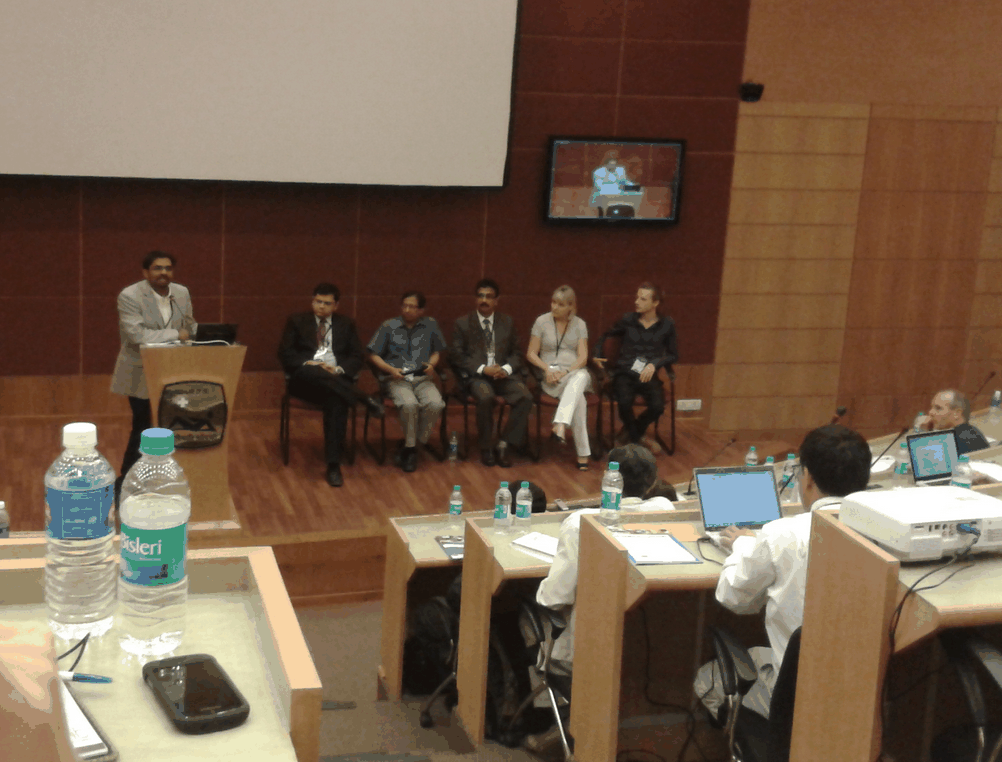
It was a wonderful experience to meet over 200 delegates from Industries, Public and Education sector, from around the globe under one roof at St.Johns hospital (beautiful campus and auditorium).
The First day Session started with the Global scenario of spread of tuberculosis and the problems in overcoming this disease. Firstly, the problem is that, the Public Health Centres (PHC) fail to reach the patients. Patients thus, they seek treatment from private health centres. Secondly, India is densely populated so the Public and Private sectors must work together to bring some effective change in the number of patients, which we see ever increasing on India’s TB graph. Lucica Ditiu, Exec. Secretary, Stop TB Partnership, said that India also needs to feel the responsibility to help other needy nations who are struggling to fight TB. Thirdly, Dr.Soumya Swaminathan, NIRT, said the problem is that we do not reach to the grass root level to the people to help them fighting against tuberculosis.


Funding:
One of the main problems which were realized by all is that there is a constant need of Funding and support from various agencies around the globe. Peter Small from BMGF, said that we need to look at the hindrances underlying funding for tuberculosis research. Jay Menon from Xprize foundation said that there is scope for introducing incentive prize model in the development of tuberculosis. Nandita Chopra from NIH said that there are five new announcements on the grants for tuberculosis on their website. VS Chahuan from ICGEB said that government is ready to fund for tuberculosis if there is a proper research model put forwarded to them. Concluding on this issue, Madhukar Pai said that there is need of common portal where all the announcements on tuberculosis funding can be done. In this way, all the working groups/companies working on TB will get updated in a real time.


Market:
In the following sessions, the private companies came up with the issue of the market feasibility in working for tuberculosis diagnostics and tuberculosis as whole. Camila Rodrigues from Hinduja Hospital Mumbai said that, often the patients are not diagnosed properly and given any antibiotics, which further leads to resistant tb. Caroline Bogren from GDF said that, there is no guarantee given to the patient about the quality of drugs they receive, there is a poor regulation in the pharmacy sector in India. There has to be a Standard treatment guideline, so that the correct diagnosis and treatment can be followed. The discussion panel also said that there is a need to build a Cheaper Efficient Fast and Portable Tuberculosis diagnosis tool, to reach to the mass. The High end diagnostics also play a major role in diagnosis, but for the first line of diagnosis there has to be a efficient and cheaper tool.

Education & Research:
On both the days of the meet, there were discussions on how to bring down the costs in research and to accelerate the innovations. Education and Industries need to come up together to bring in innovations in tb diagnostics. Education sector has the fresh talent and enthusiasm to work for a challenge. It was quoted in the meeting that, Indian Education sector needs to have its own niche rather than trying to replicate foreign system of development in education.  The huge gap between innovation and research needs to be filled by the collaboration of industries with the academia.
However there are certain limitations to overcome such as, Industries need to define what kind of expertise they need from the academics. Students should be given credits in the form of publishing the research work. To this, I spoke about the existing Academic-Industry-Government research model which already exists for the tuberculosis drug research by CSIR. Open Source Drug Discovery a consortium led by CSIR and funded by Govt of India is a best epitome of how collaborative research can work wonders. Where in people connect via social networking sites and do collaborative and quality work in limited time. This discussion was further supported by Dr.Anu Aacharya from Ocimum biosloutions.
The two day conference ended with discussions about involvement of media in spreading awareness and combating the disease.

Links:
I am giving the links to the PowerPoint presentations given at the conference

on Twitter: #tbdx2011 and #tbdm2011

Acknowledgment
To,
Director: Zakir Thomas, Open Source Drug Discovery (for giving me opportunity to represent OSDD) www.osdd.net
Chairperson: Madhukar Pai (thanks so much for inviting me for the conference) 

Co-Chairperson: John Kenneth (for giving us the opportunity to interact under one roof at beautiful campuu of SJRI) http://www.sjri.res.in/per-pages/per-john.htm

Thanks to all whom I met at the conference for friendly and encouraging interaction.

We shall Work Hard to ERRADICATE TUBERCULOSIS
Smiles J

----------------------------------------------------------------------------------------------
Following is the brief note from Madhukar Pai on the conference:
Discussions during the conference (and subsequently) has outlined several areas (and needs) that require follow-up and some coordinated action:

1.       Industry folks and academics expressed a need for clearly defined target product profiles (TPPs) on what type of TB tests need to be developed for various indications (active TB, latent TB, MDR-TB, extrapulmonary disease, point-of-care testing, etc.) and what the performance benchmarks ought to be.
2.       In particular, they seemed keen to know exactly what the RNTCP perceives as their biggest diagnostic needs, and how new products get endorsed and scaled-up with the programme.
3.       While the business case analysis by McKinsey was very valuable and timely, it is clear that a more fleshed out, in-depth analysis is required, and would be greatly appreciated by the industry. We have noted all the suggestions that were made on how such an analysis can be refined.
4.       Other specific needs that came up were: 1) TB specimen banks or standardized panels for validation studies; 2) list of possible sources of funding for TB innovations; 3) methodological advice on how to conduct validation and demonstration studies for WHO endorsement; 4) advice on WHO prequalification for TB diagnostics; 5) guidance on what quality standards to meet.
5.       Companies, especially those not working in TB, seem to want “mentorship” or technical advice on TB, and it is not clear who they can approach for issues specific to TB. When and how should companies engage with the RNTCP for advice, possible endorsement or evaluation?
6.       As more TB products get developed, it is not clear which agency or organization can conduct head-to-head validation studies to identify the best products for scale-up.
7.       Which agency or organization should take on a convening role to pull together key stakeholders that make up the complete value chain for TB innovations in India? Who can serve as the “honest broker” to bring stakeholders together (“match-making”)? How can we increase governmental participation to support TB innovations, especially since more governmental funds are now available for R&D? How can industry bodies such as CII and ABLE facilitate this?
8.       Can similar efforts to engage industry and stakeholders be made in other BRICS countries, especially China and Brazil?
9.       What sorts of innovative delivery models will be needed to drive access to innovative diagnostics, and how can we get the private sector to play a bigger role in TB control?
10.   How can we engage Indian celebrity/philanthropic individuals and groups to raise awareness about TB, and to specifically raise resources for TB innovations (e.g. for an India TB Diagnostics Prize)? What role can media and civil society play in supporting this?


Clearly, there are no easy solutions, and our conference was merely a first step in this direction. Do send us suggestions on how to address the needs identified.

We take this chance to point out some resources that might be particularly helpful:

1.       The Stop TB Partnership’s New Diagnostics Working Group has published a scientific blueprint for new TB diagnostics development and is available at: http://www.stoptb.org/wg/new_diagnostics/assets/documents/BluePrintTB_annex_web.pdf
2.       The “Evidence-based TB Diagnosis” website provides access to information on all current TB tests, new diagnostics pipeline, systematic reviews of test accuracy, WHO guidelines, research agendas, etc.: www.tbevidence.org
3.       Funding opportunities in TB are often posted on the TB Research Movement website: http://www.stoptb.org/global/research/
4.       FIND and TDR/WHO have published a global TB diagnostics market analysis report: http://www.finddiagnostics.org/export/sites/default/resource-centre/find_documentation/pdfs/tbdi_full.pdf
5.       Bio Ventures for Global Health has published a “Diagnostics Innovation Map: Medical Diagnostics for the Unmet Needs of the Developing World”: http://bvgh.org/LinkClick.aspx?fileticket=-a1C6u2LE4w%3d&tabid=91
6.       A recent publication “Towards Lab-Free Tuberculosis Diagnosis” by MSF, TAG, Stop TB Partnership and others provides an overview of work being done to develop POC tests for TB, including an assessment of resources such as specimen banks available for TB diagnostics research: http://www.msfaccess.org/content/towards-lab-free-tuberculosis-diagnosis
7.       Results for Development Institute recently published an analysis on innovation prizes for TB diagnostics:http://healthresearchpolicy.org/assessments/prizes-global-health-technologies Additional information on prizes is available on the X Prize Foundation home page: http://www.xprize.org/
8.       The WHO prequalification program is described at: http://apps.who.int/prequal/default.htm

We take this chance to thank all our partners and sponsors;  special thanks to St John’s Research Institute for the excellent conference facility, logistics and support.

We thank you again for your contribution and enthusiastic participation. We succeeded in bringing together a large number of stakeholders and hope the spark has been lit. Much more needs to be done, and we hope all of you will continue to stay engaged.

Best regards

Madhukar Pai & John Kenneth
Conference Co-Chairs
-------------------------------------------------------------------------------------------------------------------------------

PUSHPDEEP MISHRA

Friday, September 2, 2011

OSDD NEWSLETTER

Following is August months issue of OSDD newsletter
http://t.co/eg2zfJm

Sunday, July 24, 2011

*“**Advances in Organic Synthesis and its Application in Drug Discovery**”

*CSIR OSDD-ACT WORKSHOP ON*
*“**Advances in Organic Synthesis*
*and its Application in Drug Discovery**”*
*held at*
*National Institute of Interdisciplinary Science & Technology,
Thiruvananthapuram, KERALA*
*On 21st & 22nd July 2011*
*Organized by*
*CSIR - New Delhi,** **National Institute of Interdisciplinary Science &
Technology,Thiruvananthapuram & Academy of Chemistry Teachers (ACT)*
* *
* *
Under the OSDD program it is being planned to initiate a unique
OUTREACH project
during the 12th Five Year Plan to impart practical training to large number
of M.Sc. Chemistry students in various universities and colleges across the
length and breadth of the country. The initiative is an enthusiastic move to
impart greater momentum to chemistry education in our country during the
International Year of Chemistry, IYC 2011. It aims at synthesizing new small
molecules in laboratories across the country by students which could be
tested for their efficiency to be drug candidates for treating tropical
diseases such as Tuberculosis & Malaria. *Chemical Sciences and Technology
Division of NIIST, Thiruvananthapuram*, Kerala* *and* Academy of
Chemistry Teachers (ACT)*, organized a *two day training cum theme setting
workshop* *at NIIST **Thiruvananthapuram**,* for teachers who are willing to
work as PIs for the CSIR – OSDD program on *21st & 22nd July 2011**. Forty
teachers from thirty three colleges in Kerala participated in the program.*
*
*
*Dr K. V. Radhakrishnan of NIIST* who is the Academic coordinator of the
program welcomed the audience. He explained the concept and the details of
the OSDD program and M.Sc. outreach Program in synthetic organic chemistry.
*
*
*Dr. Suresh Das*, The Director of NIIST, in his inaugural address promised
all support from NIIST for the successful conduct of the OSDD program in the
state. He pointed out that OSDD fits in at the interface of chemistry and
biology.
*
*
*Dr. Ramaiah*, NIIST-CSIR enlightened the gathering by giving an overview of
the R & D activities in NIIST.
*
*
*Prof. S. Pratapan* of CUSAT, Kochi elaborated the point what an organic
chemist can do in drug discovery. He gave a brief narration of the history,
development and methods of synthetic organic chemistry and also gave a
glimpse of the present scenario very elegantly. He also emphasized on
working for a greater cause free from the clutches of patent bug or pressure
for mere publishing. His inspiring talk really motivated the participants to
actively become part of the OSDD movement.
*
*
*Dr. L. Ravishankar* of NIIST presented a paper on the "Synthesis and
properties of photolabile Ceramide 1-Phosphate Analogues".
In the afternoon the participants were divided into two batches for lab
session. They were given hands-on training in the basics of synthesis,
purification and analysis of organic compounds. Dr.
*
*
*Dr. K.V. Radhakrishnan* and his research students took leadership for the
lab sessions.
The first day deliberations came to an end with an one hour discussion,
which was lead by Dr. Shibi I.G. He called upon the chemistry teachers to
put in their own contributions and expertise to this project of OSDD in
which large research problems are broken down into handy sub units to be
solved by students teachers and scientists. This would definitely make each
college as a mini research centre. During their routine learning period
itself students will be in a position to contribute to the country by
synthesizing some new chemical candidates for drug testing. This would
enable the students clearly understand the value and purpose of their
education.
On the second day D*r. K. M. Sureshan*, from IISER Trivandrum gave a
presentation on the topic “Drug Discovery: A Chemist's Role”. He explained
the hardships and responsibilities of different branches in science in drug
discovery process. He also emphasized the role organic chemist in drug
discovery. He demonstrated his contribution in solving an innocentive
challenge (InnoCentive 5636748) for designing the shortest and economical
route to PA-824, a candidate drug for tuberculosis in 2008.
*
*
*Dr. K. V. Radhakrishnan*, talked on the role of “Palladium and Ruthenium
catalysis in Organic Synthesis”. He clearly explained the simplicity and
elegance of green synthesis by utilization of organo metallic catalysts in
organic transformations towards the synthesis of pharmaceutically important
molecules.
*
*
*Dr. U.C Abdul Jaleel* of MCC Calicut demonstrated how the OSDD portal is
working and the formalities a beginner should follow to join the OSDD
community. He also explained the salient features of the beta version of the
new website to be released soon for organic chemistry group.
*
*
*Dr. Ibnu Saud* of MG University emphasized the need of harnessing the
vast and rich natural product resources in our country for drug synthesis.
He pointed out the utilization of regional resources for value added
products to be identified from locally available plant sources and to
exploration of Chiral pool for industrially potential molecular entities
like chiral stationary phases, chiral molecular sensors etc.
*
*
*Dr. Prasad M. Alex* summed up the two day activities of the workshop. *
Dr. IG Shibi proposed vote of thanks.*
*The major decisions taken in the workshop are as follows:*
The action plan for the successful implementation of the OSDD Outreach
program programme is as follows:
1. 1. Teachers shall take up the challenge of selecting and training
students to take up the challenge of small molecule synthesis by OSDD.
2. To make students and teachers aware of the new venture of OSDD,
Academy of Chemistry Teachers (ACT) will hold several workshops and theme
generation seminars at various parts of the state in the month of August
2011 at Christ college, Irinjalalukuda; Govt college, Pattambi, Kannur
University, NSS College, Pandalam, Fatima Mata National College, Kollam and
S.H College Thevara.
3. Some of the participants of the present workshop shall present papers
on drug synthesis in the future programs.
4. NIIST, Trivandrum shall arrange 2-3 days lab training in organic
synthesis for the interested students who wish to do organic synthesis in
M.Sc Dissertation in future.
5. Before submitting project proposals to OSDD, the PI s and students
have to present the project proposals before an expert committee from Kerala
for evaluation.
6. OSDD-CSIR, New Delhi shall distribute fund for improving the existing
facilities of the college for carrying out organic synthesis.
7. Phytochemical components already isolated by various groups in the
state may be uploaded for further screening.
8. NIIST shall also try to provide an open lab facility for outside
students to undertake wet lab synthesis (After getting formal approval from
the authorities).
9. NIIST, Trivandrum , IIRBS, Kottayam, CUSAT and Department of
Chemistry, University of Kerala expressed their willingness to allow
students doing OSDD project, for spectral and other chemical analysis in
their centres, free of cost.
*Dr. I.G. Shibi
Dr. K. V. Radhakrishnan*
General Convenor
Academic